
Luxury has always been closely connected to history.
Some of the world’s most celebrated hotels occupy centuries-old palaces. Many of the most sought-after destinations are built around traditions that have existed for generations. Craftsmanship, architecture, cuisine, and hospitality often draw their value from stories that began long before modern travelers arrived.
Yet luxury is not standing still.
Across the world, a new generation of destinations, hotels, and experiences is finding ways to reinterpret the past rather than simply preserve it. Heritage is no longer viewed as something to be displayed behind glass. Instead, it is becoming an active part of contemporary travel experiences.
The result is a form of luxury that feels both rooted and relevant—respectful of history while firmly connected to the present.
Why Heritage Continues to Matter
In an increasingly globalized world, many destinations face the challenge of differentiation.
Luxury hotels can offer exceptional service almost anywhere. Design standards continue to rise. Access to premium experiences is becoming more widespread.
What remains difficult to replicate is a genuine sense of place.
This is where heritage becomes valuable.
History gives destinations depth. It provides context, identity, and a connection to something larger than the stay itself. Whether it is a centuries-old building, a traditional craft, or a culinary tradition passed through generations, heritage helps travelers understand where they are in a way that modern amenities alone cannot.
The most compelling luxury experiences often begin with that connection.
Preservation Is No Longer Enough
For many years, heritage tourism focused primarily on preservation.
Historic buildings were restored. Cultural traditions were protected. Landmarks were maintained for future generations.
While preservation remains essential, modern luxury hospitality is taking the idea a step further.
Instead of simply showcasing history, it is finding ways to make it part of the guest experience.
A restored palace becomes a contemporary hotel.
A historic estate evolves into a design-led retreat.
Traditional craftsmanship appears in modern interiors.
Ancient culinary techniques inspire contemporary menus.
The goal is not to recreate the past exactly as it was. It is to create a meaningful dialogue between past and present.
Architecture as a Bridge Between Eras
Perhaps nowhere is this transformation more visible than in architecture.
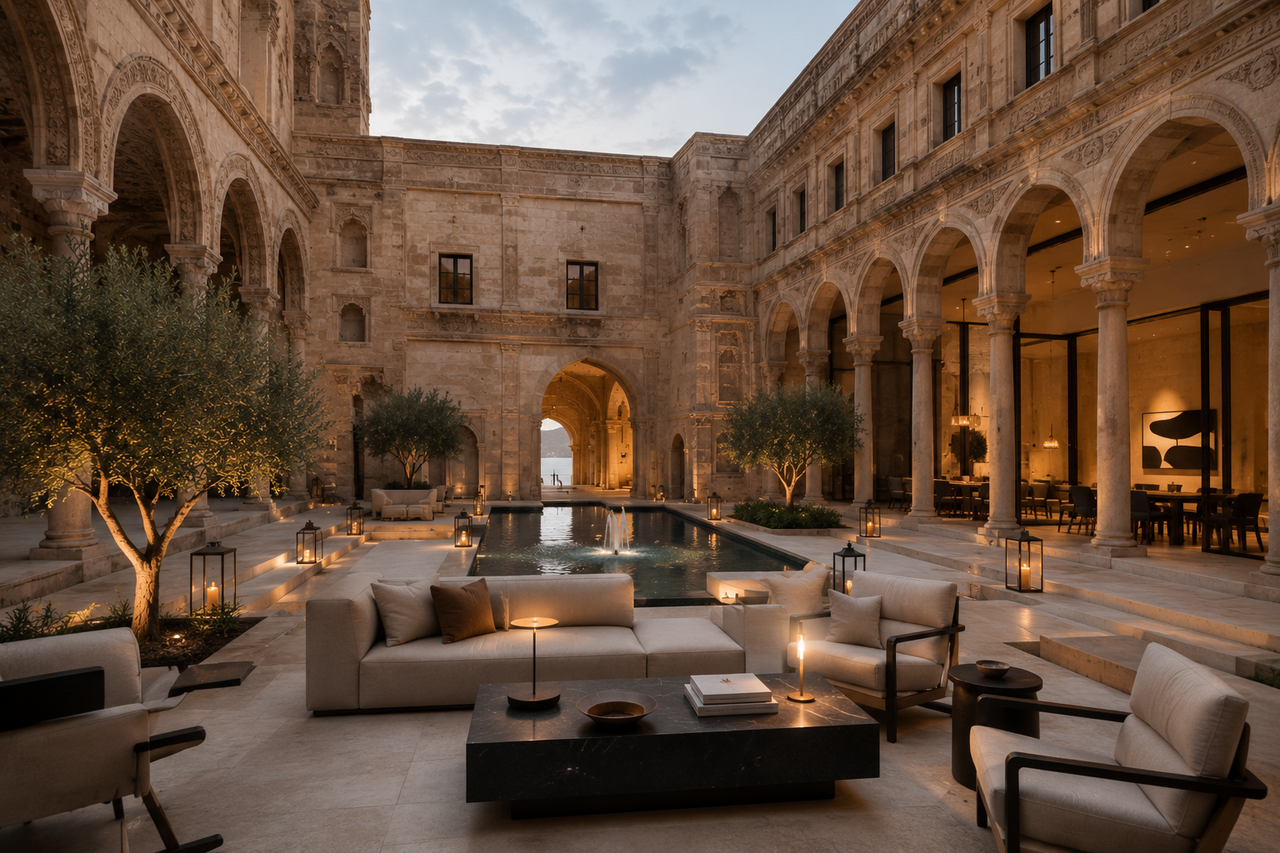
Across Europe, the Middle East, and Asia, historic structures are being thoughtfully adapted for modern hospitality. Former monasteries, castles, merchant houses, and heritage residences are finding new life as luxury properties.
The most successful projects do not erase history.
Instead, they highlight it.
Original stone walls sit alongside contemporary furnishings. Historic courtyards are complemented by modern design elements. Traditional materials are used in new ways that respect the building’s character while enhancing its functionality.
This balance creates spaces that feel timeless rather than nostalgic.
Guests are not simply observing history.
They are living within it.
Craftsmanship Finds New Relevance
The growing appreciation for craftsmanship is another reason heritage remains central to modern luxury.
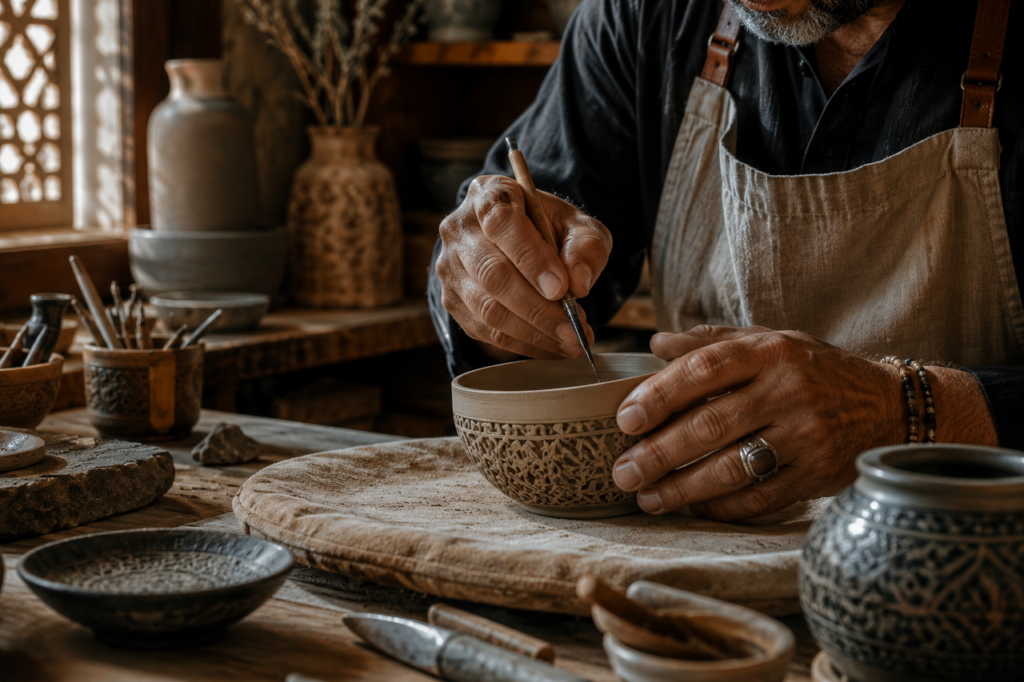
In an age of mass production, handcrafted details carry renewed significance. Travelers are increasingly drawn to experiences that feel personal, authentic, and connected to human skill.
Across luxury hospitality, this can be seen in locally crafted furniture, handmade textiles, artisanal ceramics, and bespoke design details created by regional makers.
These elements do more than enhance aesthetics.
They tell stories.
Each piece reflects traditions, techniques, and cultural knowledge that might otherwise be lost. By integrating craftsmanship into contemporary spaces, luxury brands create experiences that feel richer and more meaningful.
Culinary Heritage Is Being Reimagined
Food has become one of the most powerful ways destinations connect travelers to their history.
But contemporary luxury dining is no longer focused solely on preserving traditional recipes exactly as they were.
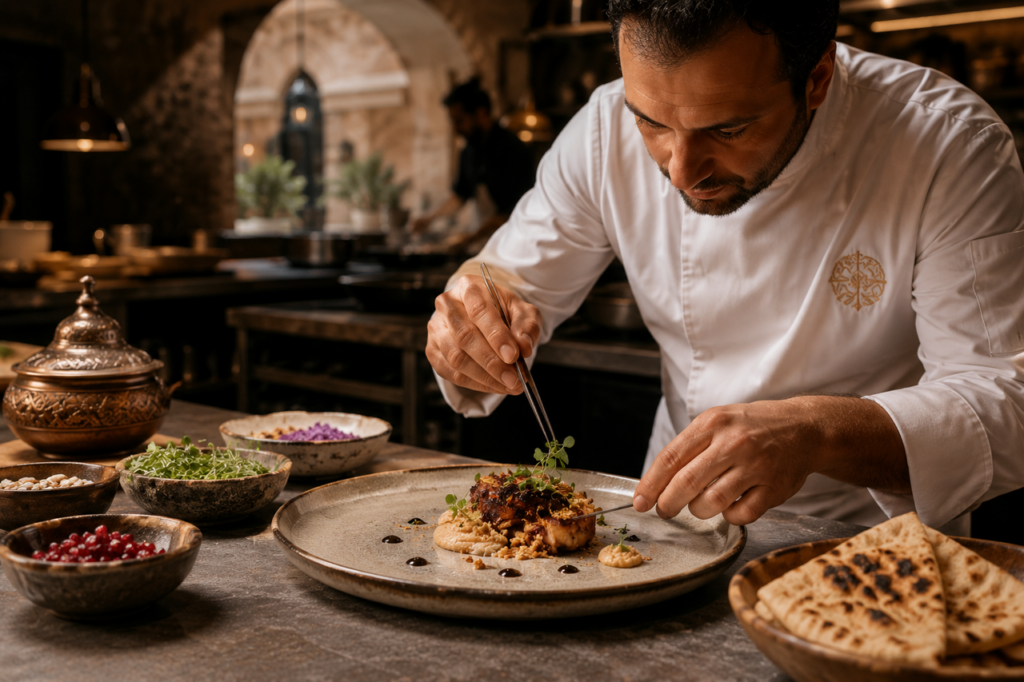
Instead, chefs are increasingly exploring how heritage can inspire innovation.
Regional ingredients are reinterpreted through modern techniques. Traditional dishes are presented in new formats. Local culinary traditions are introduced to global audiences without losing their identity.
This approach allows travelers to experience a destination’s culture while still engaging with something contemporary.
The past remains present, but it evolves.
Why Travelers Are Seeking Meaning Alongside Luxury
The growing interest in heritage is part of a broader shift within luxury travel.
Travelers are increasingly looking for experiences that feel meaningful rather than simply impressive. They want destinations that offer context, stories, and a deeper understanding of place.
A beautiful hotel may capture attention.
A destination with history captures imagination.
When heritage becomes part of the experience, travel feels less transactional and more enriching. It provides a sense of continuity between generations, cultures, and places.
That depth often becomes the most memorable part of a journey.
The Future of Luxury Is Rooted in Identity
As luxury travel continues to evolve, authenticity is becoming increasingly important.
The destinations that stand out are often those that embrace their identity rather than imitate global trends. They understand that history is not a limitation but an asset.
By combining heritage with contemporary design, modern hospitality creates experiences that feel distinctive, relevant, and emotionally engaging.
The past becomes a source of inspiration rather than a museum piece.
And luxury becomes richer because of it.
Where History Continues to Evolve
At Date With Luxury, some of the most compelling destinations are those that understand how to honor their heritage while embracing the present.
Whether through architecture, craftsmanship, cuisine, or hospitality, these places demonstrate that history does not need to remain frozen in time to retain its value.
In fact, the most meaningful luxury experiences are often the ones that allow the past to evolve.
Because true luxury is not about choosing between heritage and modernity.
It is about bringing them together in a way that feels timeless.