
Some of the most memorable places in the world do not feel built.
They feel discovered.
The architecture exists, but it never dominates the landscape. The design is intentional, yet it does not demand attention. Instead, these places create the impression that they have always belonged exactly where they are.
Across luxury travel, a growing number of hotels, lodges, villas, and retreats are embracing this philosophy. Rather than separating guests from nature, they are creating experiences that bring people closer to it.
The result is a new kind of hospitality—one where architecture becomes part of the landscape rather than something placed upon it.
A Shift Away from Statement Architecture
For many years, luxury hospitality often focused on making an impression.
Iconic buildings became destinations in their own right. Grand entrances, dramatic structures, and visually striking designs helped hotels stand out in increasingly competitive markets.
While architectural ambition remains important, many of today’s most compelling properties are taking a different approach.
Rather than asking guests to admire the building, they invite guests to experience the environment around it. The architecture serves as a frame through which the landscape can be appreciated.
In these spaces, the view often becomes more important than the structure itself.
Designing With the Environment, Not Against It
The most successful nature-inspired hotels share a common philosophy.
They work with their surroundings rather than attempting to transform them.
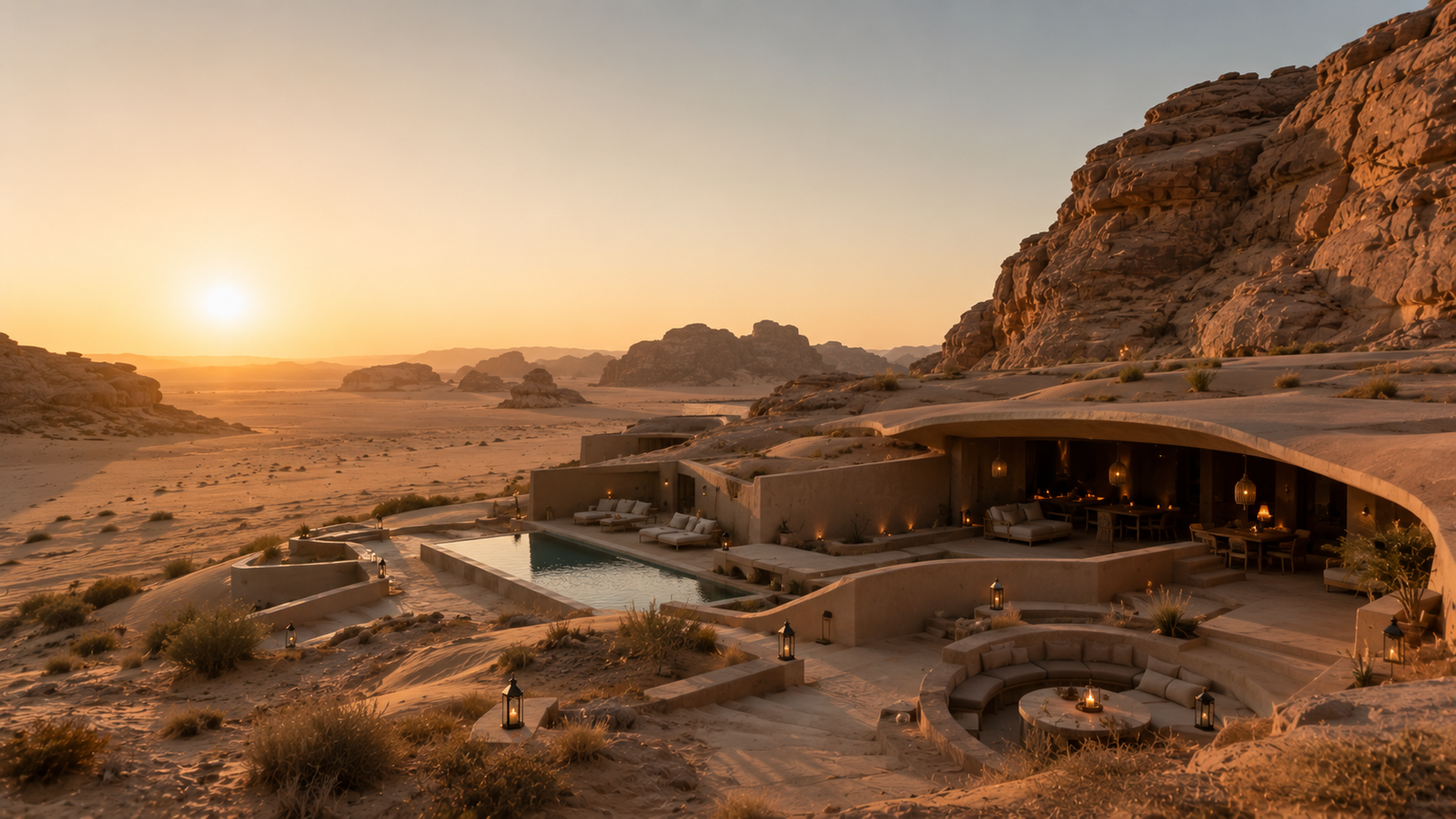
A desert retreat follows the contours of the dunes. A mountain lodge mirrors the textures and colours of the surrounding terrain. A coastal villa opens itself toward the horizon instead of competing with it.
Materials are often selected for the way they connect a building to its environment. Stone, timber, clay, and natural fabrics create a visual continuity between indoor and outdoor spaces, helping the transition feel seamless.
The experience becomes less about entering a hotel and more about becoming part of a landscape.
The Appeal of Invisible Luxury
One of the defining characteristics of modern luxury is subtlety.
Increasingly, travelers are seeking destinations where luxury feels integrated rather than displayed. They are drawn to properties that offer comfort and sophistication without overwhelming the natural setting.
This is where architecture that blends into the environment becomes particularly powerful.
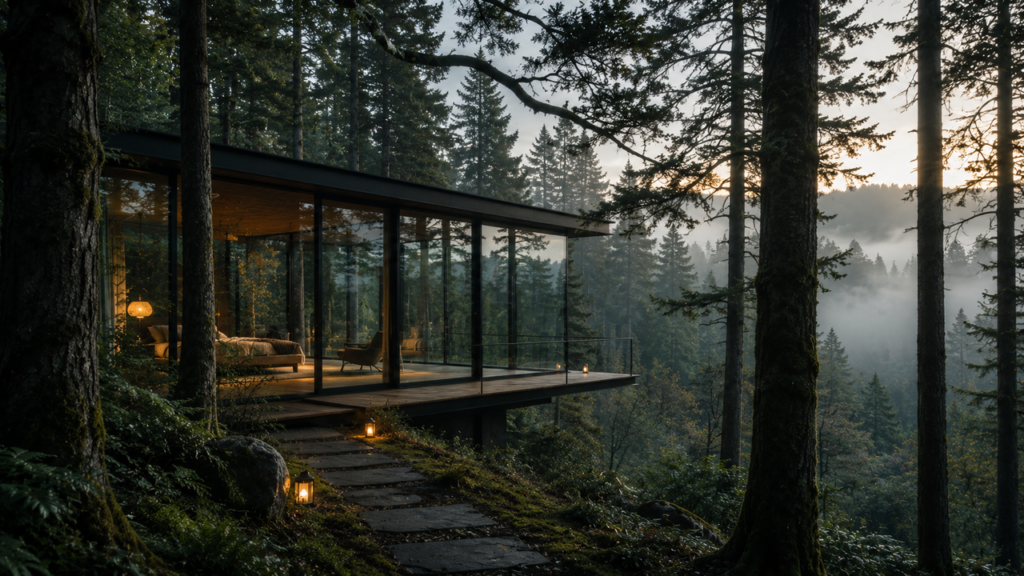
The luxury exists in the experience rather than the statement. Floor-to-ceiling windows frame uninterrupted views. Open-air spaces invite natural light and fresh air inside. Rooms feel connected to forests, coastlines, deserts, or mountains rather than separated from them.
The property disappears into the background, allowing the destination to take center stage.
Nature Changes the Experience of Time
There is something remarkable about waking up surrounded by nature.
Without the distractions of urban environments, attention naturally shifts toward smaller details. The movement of light across a landscape. The sound of wind through trees. The rhythm of waves meeting the shore.
These experiences influence more than what travelers see. They influence how travelers feel.
Many of the world’s most immersive stays create a sense of slowing down. The pace becomes less structured, conversations last longer, and moments of stillness become part of the experience rather than interruptions to it.
In this way, the landscape becomes an active participant in the journey.
Why Emotional Connection Matters
Travelers often remember destinations that created a strong emotional response.
Architecture can play an important role in that process.
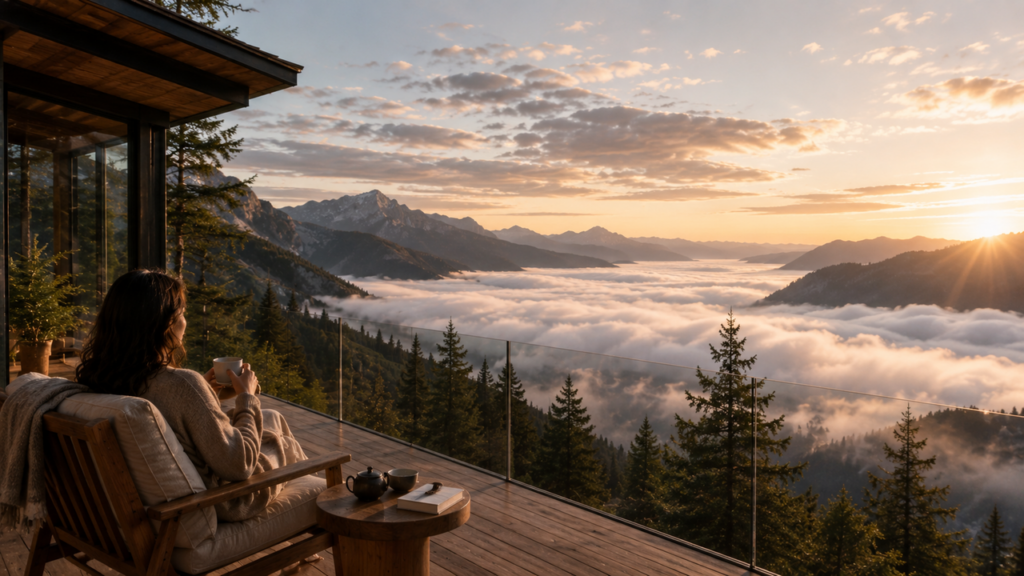
A room suspended above a forest canopy. A villa positioned to capture the first light of sunrise. A desert retreat where the horizon feels endless from every angle.
These experiences stay with people because they create a direct relationship between the guest and the environment.
The architecture facilitates that connection rather than distracting from it.
When design and landscape work together, the result often feels less like accommodation and more like immersion.
The Rise of Design-Led Nature Retreats
Across the world, some of the most sought-after luxury stays are built around this philosophy.
From Scandinavian cabins hidden within forests to desert lodges in the Middle East, cliffside retreats in the Mediterranean, and eco-conscious resorts surrounded by untouched landscapes, a common theme is emerging.
Travelers are increasingly choosing places that allow them to experience nature without sacrificing comfort.
These properties demonstrate that luxury and environmental connection are no longer separate ideas. In many cases, they have become inseparable.
The quality of the experience is measured not only by service or amenities, but by how deeply guests feel connected to where they are.
A Different Vision of Luxury
The future of luxury travel is becoming increasingly experiential.
People are moving away from destinations that simply impress and toward places that create lasting emotional connections. They are looking for environments that feel authentic, immersive, and rooted in their surroundings.
Architecture plays a crucial role in this shift.
When it is thoughtfully designed, it enhances the landscape rather than competing with it. It creates space for travelers to engage more deeply with a destination and to experience a place in a way that feels both personal and memorable.
Where Design Disappears and Experience Begins
At Date With Luxury, some of the most extraordinary destinations are the ones where architecture quietly steps aside and allows the landscape to tell the story.
Whether it is a desert retreat shaped by the dunes, a coastal villa overlooking an endless horizon, or a forest lodge immersed in nature, these are the places that remind us luxury is not always about what is built.
Sometimes, it is about how beautifully a place allows you to experience what was already there.
And that is where the most memorable stays begin.